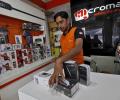
According to research firm IDC, a slowdown in smartphone shipments began showing up as early as late February, though companies insist that the March quarter was fine, albeit on a low base.

Shortage of ICU beds, oxygen, ventilators, vaccines, doctors, nurses and crematorium space in India has dominated headlines around the world in the past few weeks with Covid-19 cases surging beyond control and the government failing to deliver. Yes, election rallies, Kumbh Mela, blatant flouting of social distancing and mask protocols coupled with a messy vaccination process are said to be responsible for the health crisis of colossal proportions that India is facing today. But an analysis of Budget speeches made by finance ministers over 75 years also offers a glimpse of how low on the priority list healthcare has featured for the political class and policy-makers, which is a significant reason for the current situation.

While the record shipments reflects the prevailing mood at the time, the exponential rise in Covid cases in the country has turned the tide since.

From trucks lined up and waiting in the area to local vendors, the scenes tell a story of livelihoods stalled.

The new iMac, two iPads and iPhone 12 and 12 Mini will be open for ordering starting April 30, just like in the US, the UK, China and Japan.

Becoming a unicorn is surely a marker for a company in its growth story, but it's not a major achievement nor is it a turning point of any significant worth.

Booked between 2007 and 2011, out of the total 32,700 residential units under various Jaypee Infratech (JIL) projects, at least 20,000 homes are yet to be delivered. Supreme Court documents show that, till last March, Jaypee had issued 7,997 offers of possession to homebuyers while executing only 6,530 sub-lease deeds. These deeds offer homebuyers possession rights but, unlike registration, does not guarantee absolute ownership.

'Ultimately, we have to understand that we don't have the supply at the population scale. 'Therefore, it has to be prioritised.' 'That's what the government has done.'

India's Rs 4.5-trillion fast-moving consumer goods (FMCG) sector was one of the first to bounce back from the lockdown induced blues, reporting a year-on-year (YoY) growth in the October-December quarter last year. That said, the overall consumption figures continue to remain depressed. The FMCG market, which includes daily consumables like branded atta, hand sanitizers, edible oils, shampoos, razors, and so on, recorded 7.3 per cent value growth during the period, while the smartphone market grew by 21 per cent.

Apart from bringing new suppliers on board, Xiaomi is also hoping to take advantage of the newly launched PLI scheme that offers incentives on incremental production of smartphones with 2020 as the base year.

'Sure, we are teenagers who are doing this part time, but we feel we are making some sort of an impact.'
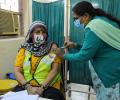
Anybody over 50 years of age or with co-morbidities can get a date, place and time of choice for getting the vaccine shots.

Expansion of distribution network, venturing into new markets, supplementing production capacity, and ramping up workforce are all on the cards. Instead of trying to fight with brands having massive war chests, it will pass on the benefits to consumers by offering them phones at lower prices.
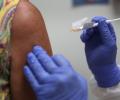
'People on the wait list will be accommodated for vaccination when the scheduled beneficiaries don't turn up.'

Even if 5G is not launched by operators this year, the handsets market will certainly witness a strong supply ecosystem for 5G ready smartphones in 2021.

New proposals like booking of retailers selling loose cigarettes and 7 years of imprisonment, are unacceptable, traders argued.

The Rs 1.5-trillion-a-year industry has ended the year with a 30 per cent fall in sales because after a steady recovery in the festive season, multiple factors dashed its hopes of revival at the end of the year.

Nivedita Mookerji explains why a timely rollout of 5G may not be easy in India.

Zara could rake in Rs 1,571 crore sales in 2019-2020. H&M, which came in five years later, grew its revenue to Rs 1,729 crore.

With supply of mobile chipsets running dry, manufacturers here are left with no option but to hike prices once again, making it the fourth round of increase in 2020.
 © 2025 Rediff.com - Investor Information - Advertise with us - Disclaimer - Privacy Policy - Sitemap - Feedback - About us - Terms of use - Grievances